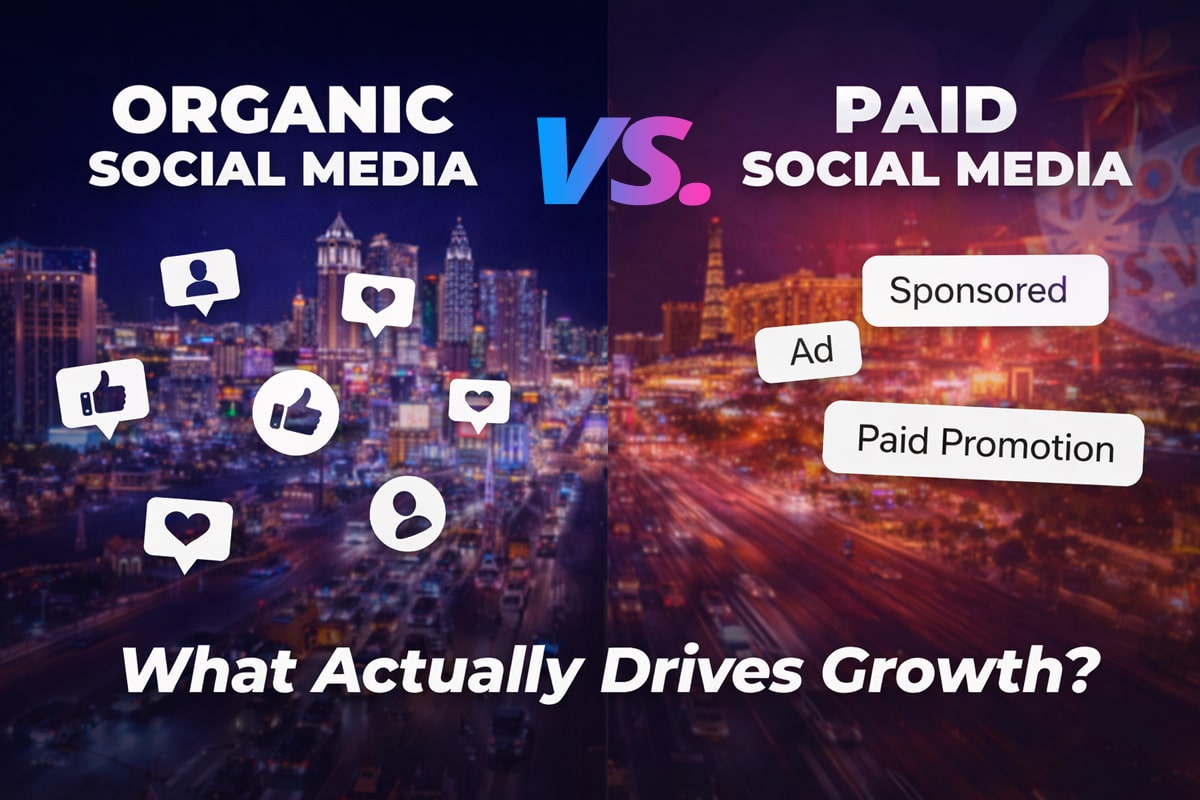
In today’s competitive digital landscape, businesses constantly debate one major question: Should you invest in organic social media growth or focus on paid advertising? Both strategies play an important role in digital marketing, but understanding how each contributes to measurable growth is essential for making informed decisions.
At Social Media LV, we work with businesses across Las Vegas to develop strategic campaigns that combine creative storytelling with performance-driven advertising. Through our organic Social Media Services Las Vegas businesses rely on, we help brands build authentic audience engagement while supporting that growth with targeted paid strategies.
The truth is, organic and paid social media are not competing strategies — they are complementary tools. When used strategically together, they drive sustainable growth, brand awareness, and long-term revenue.
Understanding Organic Social Media
Organic social media refers to unpaid content shared on platforms such as Facebook, Instagram, LinkedIn, and TikTok. This includes regular posts, reels, stories, comments, and direct engagement with followers. Organic growth happens naturally when users discover, engage with, and share your content without paid promotion.
The biggest strength of organic social media is long-term brand building. Consistent posting builds trust and authority within your industry. Businesses that publish educational content, behind-the-scenes insights, testimonials, and value-driven posts establish stronger emotional connections with their audiences.
Organic strategies are particularly effective for:
- Building brand identity
- Strengthening customer relationships
- Increasing engagement
- Establishing thought leadership
However, organic reach has declined over the years due to algorithm changes. Platforms prioritize paid placements and highly engaging content, making it more challenging for businesses to maintain visibility without a clear content strategy.
The Power of Paid Social Media Advertising
Paid social media advertising involves promoting content through sponsored posts, boosted content, and highly targeted ad campaigns. These campaigns allow businesses to reach specific audiences based on demographics, location, interests, behaviors, and purchasing intent.
The main advantage of paid social media is speed. While organic growth builds gradually, paid campaigns can generate immediate traffic, leads, and sales. For product launches, promotions, or lead-generation campaigns, paid ads provide measurable results quickly.
Paid campaigns also offer advanced analytics and tracking capabilities. Businesses can monitor click-through rates, cost per lead, conversion rates, and return on ad spend. This level of data allows continuous optimization for better performance.
Organic Social Media: Strengths and Limitations
Organic social media excels at relationship-building. When followers regularly interact with your content, they develop familiarity and trust with your brand. Trust is a key factor in purchasing decisions, especially in competitive markets like Las Vegas.
Another advantage is authenticity. Organic content often feels more genuine and less promotional. Behind-the-scenes videos, team highlights, educational posts, and community involvement build credibility over time. When supported by strong search engine optimization, this content can extend beyond social platforms and attract long-term traffic through improved online visibility.
However, organic strategies require consistency and patience. Posting sporadically or without a structured content plan rarely produces sustainable growth. Additionally, algorithm restrictions mean even high-quality posts may not reach your entire audience without support from paid advertising and a well-rounded digital marketing strategy.
Paid Social Media: Strengths and Limitations
Paid advertising provides instant visibility. It allows businesses to scale quickly and test campaigns efficiently. Through A/B testing and retargeting, companies can refine messaging and maximize conversion rates.
Retargeting is particularly powerful. Businesses can reconnect with users who previously visited their website or interacted with their content, significantly increasing conversion potential.
The primary limitation of paid advertising is cost dependency. Once ad spending stops, visibility decreases. Without a strong organic foundation, businesses may struggle to maintain brand recognition long-term.
What Actually Drives Sustainable Growth?
Sustainable social media growth does not come from choosing one strategy over the other. Instead, it comes from integrating both organic and paid tactics into a cohesive marketing plan.
Organic content builds credibility and community. Paid advertising expands reach and accelerates results. When combined strategically, businesses create a powerful growth engine.
For example, high-performing organic posts can be boosted to reach broader audiences. Paid ads can drive traffic to content that builds trust and engagement. This balanced approach reduces wasted ad spend while strengthening long-term brand authority.
Businesses that rely exclusively on organic methods often struggle with reach limitations. Those relying solely on paid ads may lack authentic engagement. The real growth happens when both strategies work together.
Creating a Balanced Social Media Strategy
A strong strategy begins with clearly defined goals. Are you trying to increase brand awareness, generate leads, drive website traffic, or increase sales? Once goals are established, organic and paid strategies can align accordingly. For a deeper comparison of organic content and paid media and how each supports business growth, check out our detailed guide here.
Organic content can focus on storytelling, education, and community engagement. Paid campaigns can target conversions, retargeting audiences, and expanding reach to new demographics. Consistent content planning, audience research, competitor analysis, and performance tracking are essential for both approaches. Businesses that treat social media as a structured marketing channel—rather than random posting—see stronger long-term results.
Measuring Performance and ROI
Growth is not just about likes and followers. Meaningful metrics include engagement rate, click-through rate, cost per lead, conversion rate, and return on ad spend.
Organic metrics typically measure engagement, shares, comments, and follower growth. Paid metrics focus on cost efficiency and conversion performance.
Regular performance reviews allow businesses to refine strategies and allocate budgets effectively. This data-driven approach ensures campaigns continue improving over time.
The Role of Professional Social Media Management
Managing both organic and paid social media effectively requires time, creativity, and analytics expertise. From content creation to ad optimization, every component plays a role in driving growth.
Working with experienced social media professionals ensures your campaigns are structured, optimized, and aligned with business objectives. Instead of guessing what works, businesses can rely on proven strategies backed by data.
Frequently Asked Questions
Is organic social media enough to grow a business?
Organic strategies build trust and engagement, but combining them with paid advertising typically produces faster and more scalable growth.
How much should I invest in paid ads?
Ad budgets vary depending on goals, industry competition, and target audience. Testing and optimization determine ideal spending levels.
Which platforms are best for advertising?
The best platform depends on your target audience. Facebook and Instagram work well for broad audiences, while LinkedIn may be better for B2B campaigns.
How long does organic growth take?
Organic growth often requires several months of consistent posting and engagement before measurable results appear.
Can small businesses compete using paid social media?
Yes. Paid campaigns can be scaled to fit small budgets and targeted precisely to reach ideal customers.
Conclusion
Organic and paid social media are not opposing strategies. They are complementary tools that work best together. Organic content builds trust, credibility, and community. Paid advertising drives targeted traffic, leads, and measurable conversions.
Businesses that integrate both approaches strategically experience stronger brand visibility, consistent engagement, and sustainable growth.
If you’re ready to build a powerful social media strategy that blends organic engagement with performance-driven advertising, Social Media LV is here to help.
Call us at 702.202.4620 for a free consultation to discuss your case, or please submit a form through here.